
Content
Saudi Arabia’s business landscape is gradually shifting as the Kingdom expands its economic focus beyond consumer-driven commerce toward industry, technology, and enterprise-level activity under Vision 2030.
For many years, commercial growth was supported by strong domestic spending and retail expansion, reflecting a B2C-first market environment. Today, Saudi Arabia is developing into a regional business and logistics hub where companies operate through interconnected supply chains rather than isolated commercial channels.
This evolution is driving the growth of B2B marketing, where business communication increasingly centers on demonstrating technical capability, trustworthiness, and real execution value.
1. Economic Diversification Creates New B2B Markets
Vision 2030 aims to expand non-oil GDP, strengthen private-sector contribution, and reduce reliance on public employment. This shift has accelerated growth across:
- Technology
- Renewable energy
- Tourism
- Logistics
- Healthcare
- Financial services
- Advanced manufacturing
Each sector expansion multiplies inter-firm dependency. As enterprise density increases, competitive positioning becomes essential. In diversified economies, companies must express capability, scalability, integration capacity, and measurable value. That articulation is B2B marketing.
2. Government-Led Projects Are Raising Commercial Standards

NEOM alone represents a projected $500 Billion development platform. Projects such as the Red Sea Global and Qiddiya are generating multi-layered commercial ecosystems. Companies now compete for roles in:
- Smart infrastructure
- Green energy components
- Advanced construction materials
- Industrial automation
- Specialized logistics services
Access to these supply chains depends on demonstrating technical capability and a reliable execution history. Marketing in this environment focuses on demonstrating competence, certification, and real project experience rather than only promoting services.
3. Digital Transformation Reshapes B2B Buyer Behavior
AI is projected to contribute over $135.2 Billion by 2030 to the economy of Saudi Arabia. Government platforms such as Etimad have digitized procurement processes. Digital tender systems make business evaluation more structured. Companies are now expected to provide:
- Technical documentation
- Case studies
- Certification records
- Compliance proof
When procurement becomes digital, a company’s online and technical presence plays a larger role in winning business opportunities. B2B marketing is increasingly used as a preparation stage before formal bidding.
4. Localization Programs Are Changing Supplier Expectations
Saudi Arabia is encouraging local industrial capability through initiatives such as the National Industrial Development and Logistics Program and the Saudi Made program. Major organizations, including Saudi Aramco and the Public Investment Fund, increasingly prefer suppliers that show local economic contribution. B2B marketing now includes communicating:
- Local presence
- Workforce development
- Supply chain participation
- Compliance with national standards
Trust is built by showing how a company contributes to the Saudi economy.
5. Workforce Professionalization Is Supporting Market Sophistication
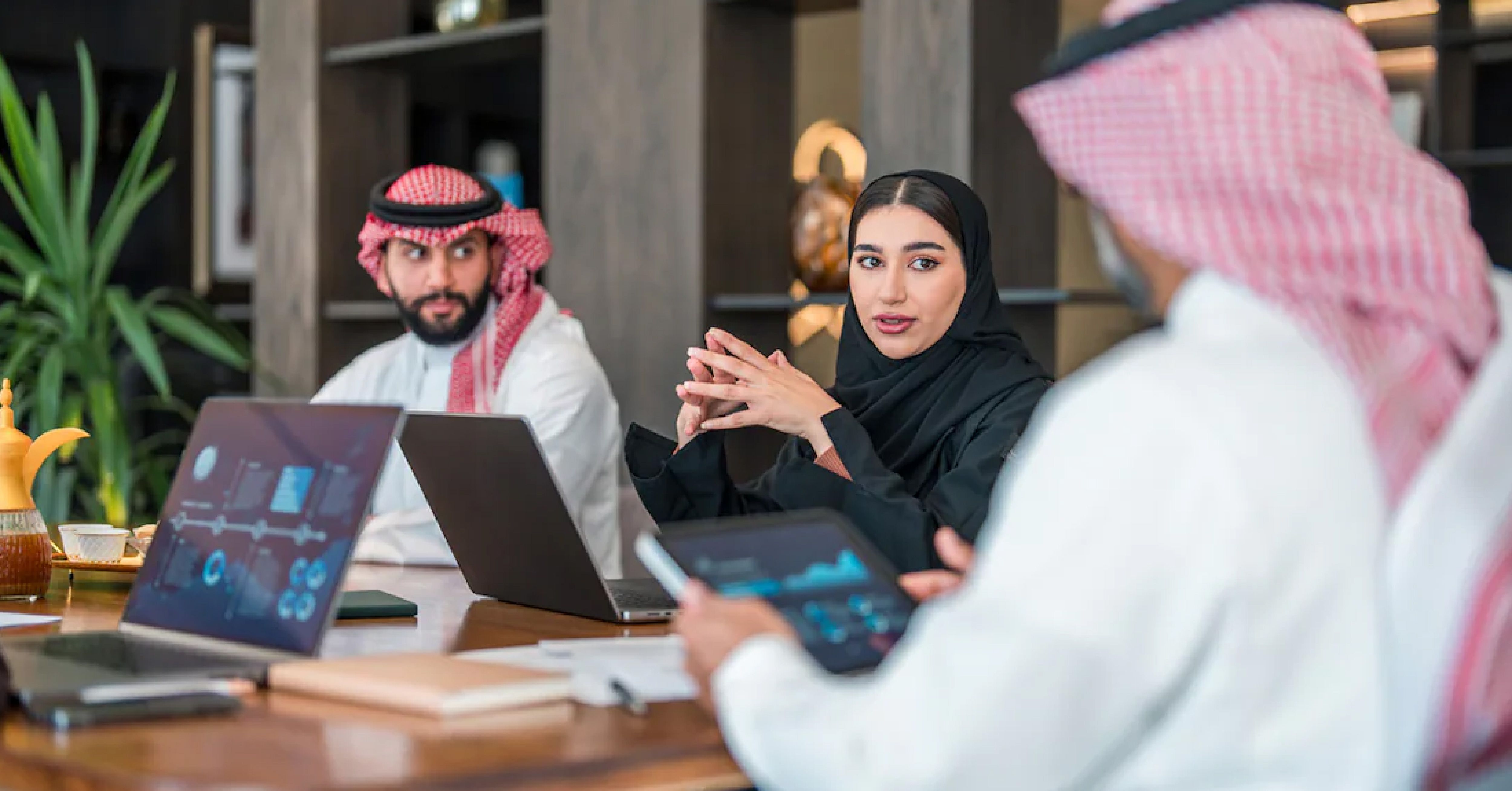
Saudi Arabia has also set workforce participation goals under Saudi Vision 2030, including efforts to increase women’s participation in the labor market. One of the long-term targets was to increase female workforce participation from roughly 22% toward 30%, reflecting the Kingdom’s broader push toward inclusive economic development and professional workforce expansion.
Greater workforce diversity is contributing to the growth of specialized business functions such as market research, strategic communication, and enterprise marketing. Buyers now expect documented performance history, technical validation, and implementation proof before starting commercial discussions.
6. Marketing Is Becoming a Strategic Business Function
Saudi labor policy changes have increased the number of Saudi professionals working in marketing and sales roles. This supports the growth of:
- Market research capability
- Localized communication
- Sector-focused strategy
- Digital engagement methods
Marketing departments are gradually evolving from operational support units into strategic business communication functions. Companies are investing more in market research, localized messaging, and sector-specific positioning to compete in complex enterprise supply chains.
7. Riyadh Is Becoming a Regional Business Decision Hub
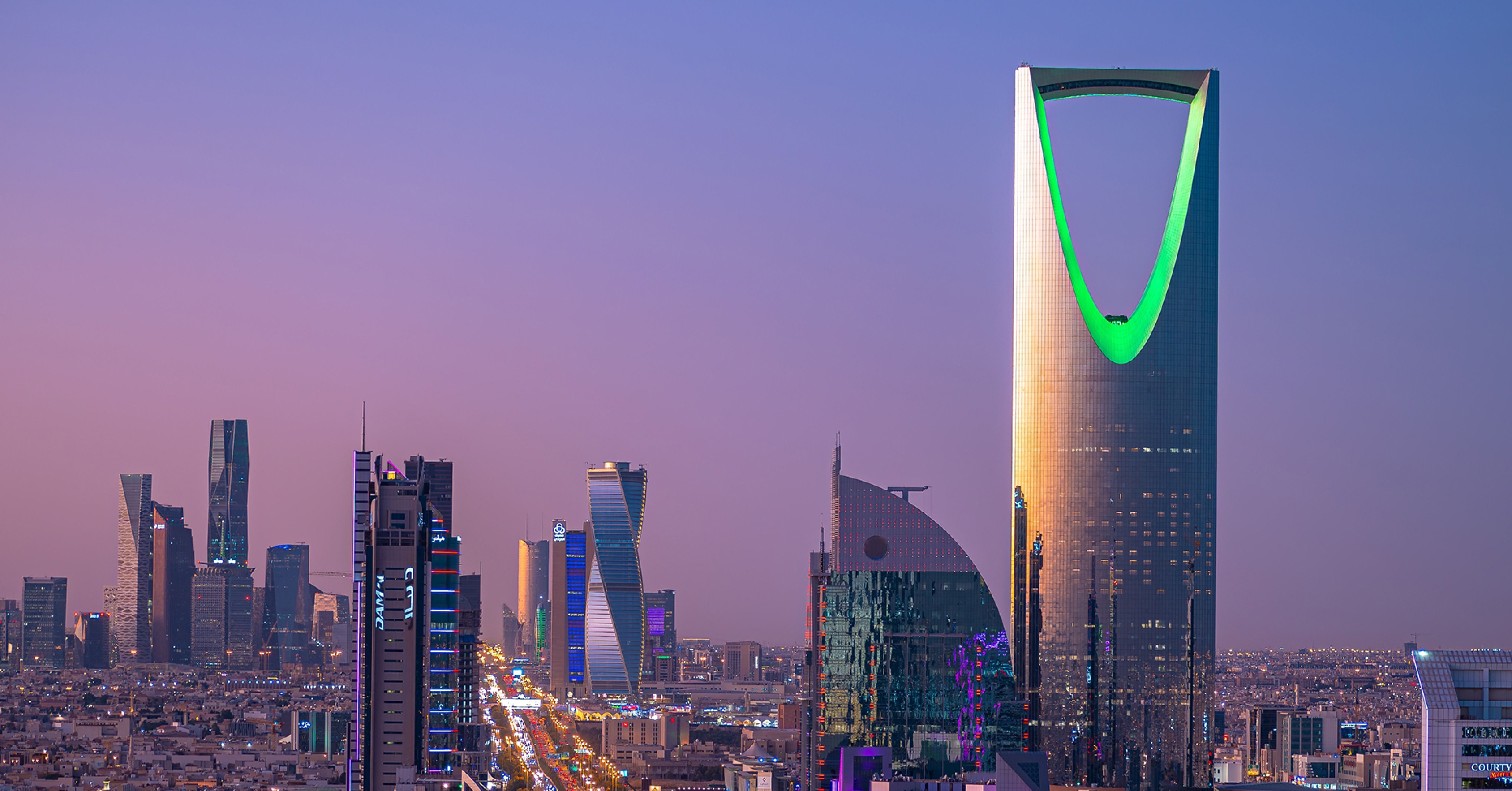
The Regional Headquarters initiative has attracted many multinational companies to establish MENA leadership operations in Riyadh. Events such as LEAP and the World Defense Show are becoming important spaces for enterprise networking and complex solution discussions. B2B marketing is moving toward relationship-building within high-level professional ecosystems.
NEOM’s Role in Saudi Arabia’s B2B Expansion

Projects like NEOM illustrate how Saudi Arabia’s economic model is evolving. NEOM is not only an infrastructure development project. It functions as a large-scale enterprise platform that brings together technology firms, energy companies, logistics operators, and advanced manufacturing suppliers. Companies entering this ecosystem are evaluated on practical capability, compliance readiness, and proven execution experience rather than marketing visibility alone.
Conclusion:
The growth of B2B marketing in Saudi Arabia reflects the structural evolution of the economy under Saudi Vision 2030.
As industries diversify, procurement becomes more formal, digital infrastructure expands, and enterprise networks grow more complex. Marketing is increasingly playing a role in communicating technical capability, compliance readiness, and strategic value inside supply chains.
In Saudi Arabia’s evolving economy, marketing is becoming a coordination mechanism inside enterprise networks, helping companies signal capability, trustworthiness, and strategic alignment within complex supply chains.