
The Quiet Revolution in Succession: How AI Accelerates the Next Generation’s Rise
By Jannat Azam • March 19, 2026
Let's talkContent
Leadership is changing quietly, but fast. The entry-level roles that once prepared future managers are being automated by AI, erasing the traditional “ladder to the top.”
At the same time, a new generation is entering the workforce with its own vision of leadership, one built on purpose, balance, and collaboration instead of titles and hierarchy.
Gen Z, currently 20% of the global workforce and projected to hit 30% within a decade, has grown up amid rapid technological change and global uncertainty. They are not rejecting leadership, but rather the old model.
Together, AI and Gen Z are reshaping succession: quietly, steadily, and in ways that will define the future of leadership.
The Gen Z Effect: Redefining Leadership on Their Terms
If leadership used to be about climbing a ladder to the top, Gen Z is asking why we need the ladder at all.
This generation has seen almost everything: economic uncertainty, social movements, climate crises, and now the rise of Artificial Intelligence (AI). These experiences have shaped what they value in work and in leaders. Flexibility, purpose, and authenticity matter more to them than rigid hierarchies or outdated notions of authority. They look for leaders who are trustworthy, ethical, and adaptable. The individuals who foster psychological safety and genuinely care about their well-being.
It’s no surprise some managers label Gen Z as “challenging.” According to the survey, 74% of managers say Gen Z is the most challenging generation to work with. But “challenging” doesn’t mean difficult; it means they are challenging the status quo.
And rejecting the old system does not mean they don't want to lead. Their approach to leadership looks different. They would rather jump into projects, lead small teams, and experiment with ideas rather than climb step-by-step through titles and office politics. They learn best through mentorship and real-world experience, not endless performance reviews or rigid corporate rules.
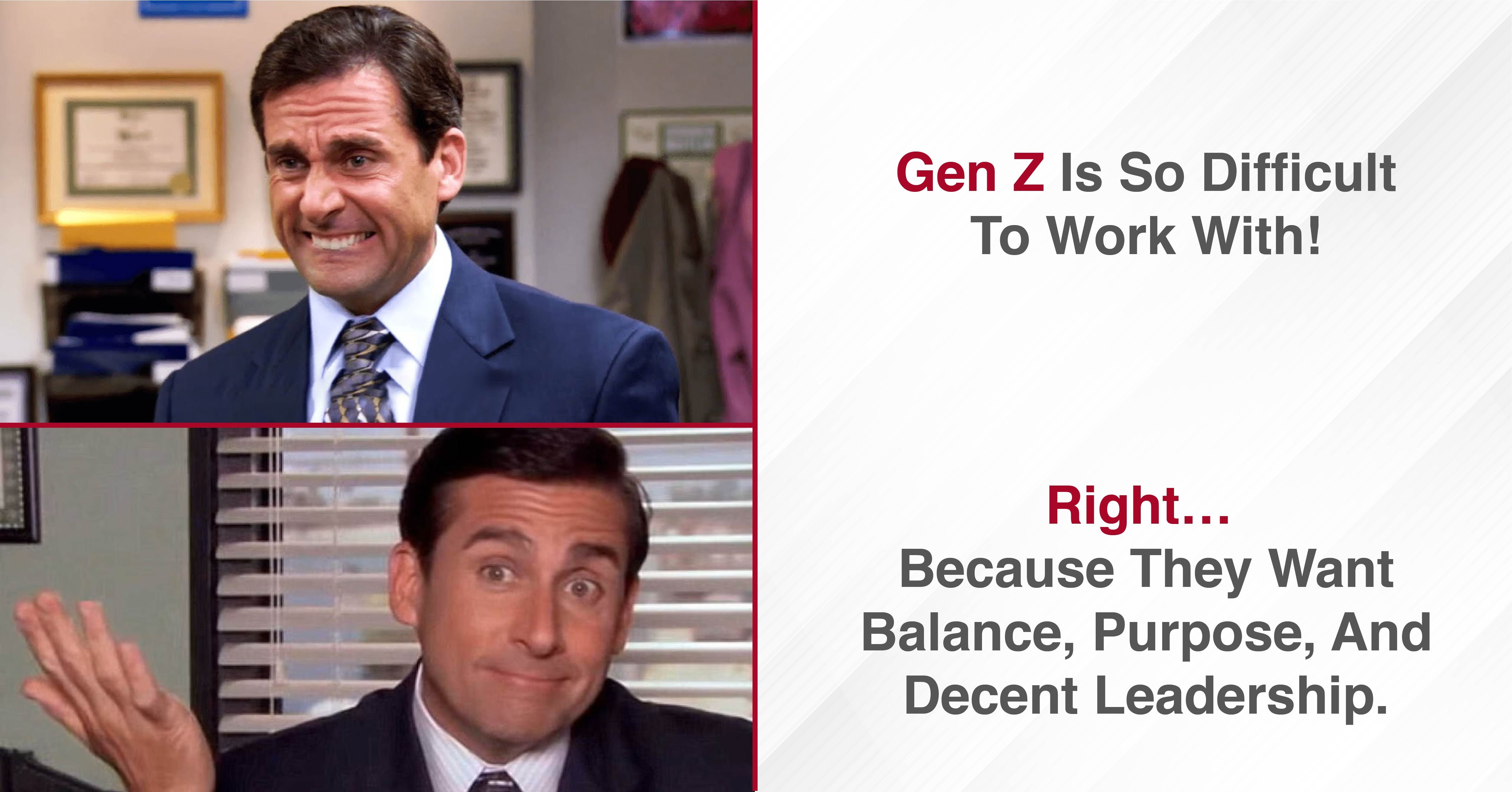
For organizations, this shift is both a challenge and a chance. The traditional pipeline, which is already eroded by AI, cannot hold. The opportunity is in designing flexible, purpose-driven succession plans aligned with Gen Z’s values, preparing them to lead in an AI-enhanced world where human-centric skills matter most.
Why Climbing the Ladder Isn’t Enough
Money and titles are the incentives that fuel the previous generation, but they are not enough to get the attention of Gen-Z. Instead, purpose drives them. They want to know that their work matters, that it has a positive impact on people, society, or the planet. A paycheck is necessary, yes, but it is rarely the deciding factor.
In fact, based on a survey, 73% of Gen Z would take a pay cut or a step down to switch to a more fulfilling career.
They see work as a chance to make an impact rather than just to earn money. While what “purpose-driven work” means can vary, from personal goals to broader societal change, this generation is making career decisions based on it.
In fact, in Deloitte’s Survey, 44% of Gen Zs said they left a role that felt like it “lacked purpose,” and around 40% reported rejecting assignments or employer offers that clashed with their ethics or values. This shows that meaningful work is non-negotiable; they want to collaborate, innovate, and contribute to something larger than themselves.
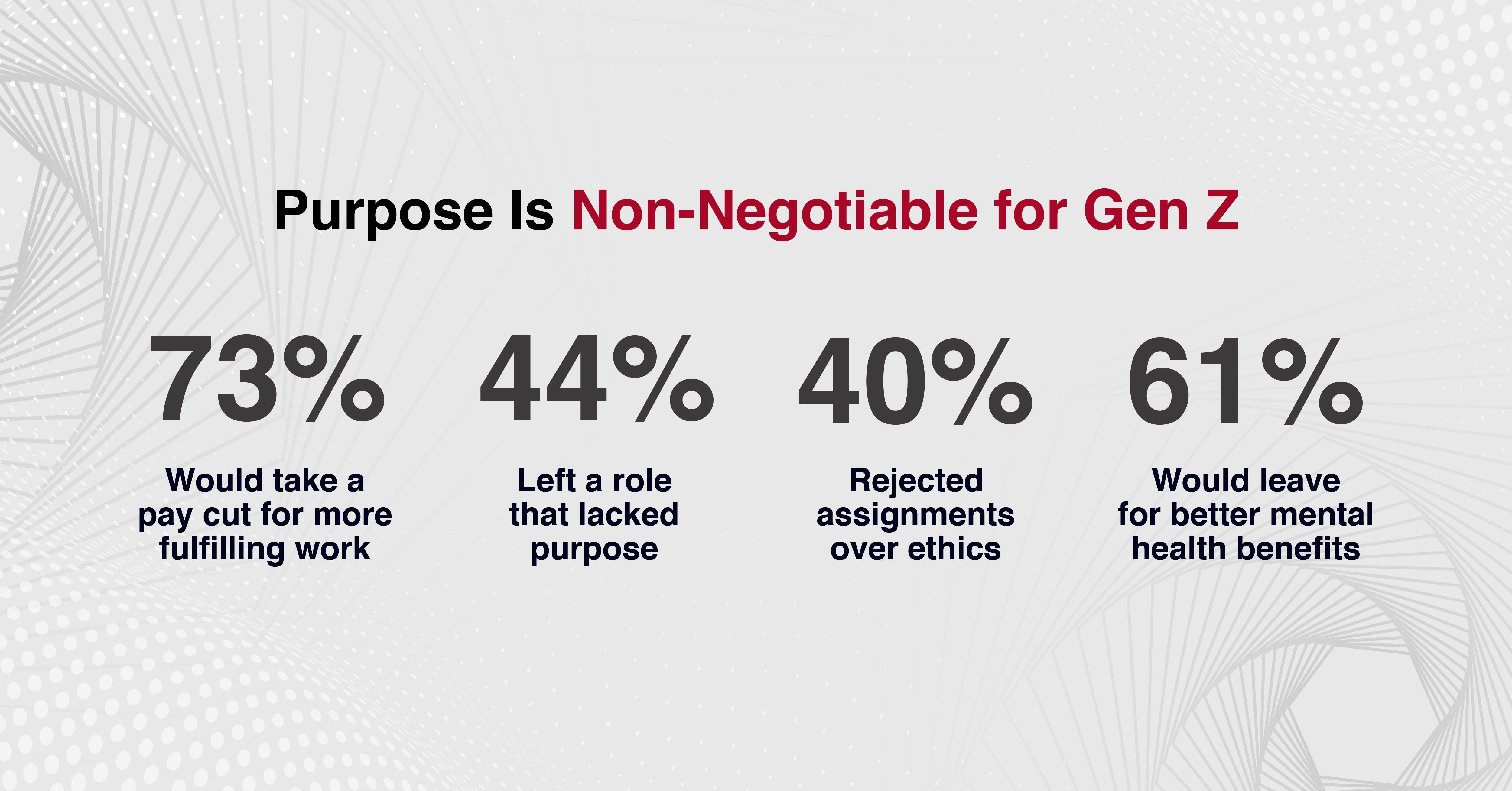
Flexibility, autonomy, and well-being are also very important. Gen Z works best when they can shape their work, manage their time, and balance life and career. Leadership opportunities appeal only when they come with freedom and meaningful responsibility, not just authority. It’s no surprise, then, that SHRM research finds 61% of Gen Z workers would consider leaving their current job if offered one with significantly better mental health benefits.
Learning and growth matter more than hierarchy. They want hands-on experience, mentorship, and opportunities to try different roles so they can build skills, influence, and confidence. Collaboration and purpose motivate them far more than rigid titles.
AI and Gen Z: Redefining How Leaders Are Built
AI is transforming the workplace like never before. Tasks that once gave emerging leaders their first lessons in decision-making and project management are now often handled by machines. At first glance, this looks like a setback, fewer chances to learn the basics. In reality, it’s a reset.
But for Gen Z, this is far from a roadblock. It frees them from repetitive work and allows them to focus on what truly excites them, such as solving creative problems, collaborating with others, and making a meaningful difference.
Over time, AI has become a partner, a co-pilot that handles routine work so humans can focus on what machines cannot. Many of us assume machines can do almost anything, but there are critical aspects only humans can provide, such as empathy, vision, connection, and ethical judgment.
Gen Z is comfortable with technology. They embrace it and also teach others how to use it. They bring fresh energy to analyzing data, uncovering insights, and experimenting in ways previous generations couldn’t imagine. In this partnership between humans and AI, leadership is less about command and control and more about inspiring innovation and nurturing growth.
The Future of Leadership Development: From Ladders to Launchpads

The leadership ladder is becoming outdated. Step-by-step promotions no longer match the way Gen Z learns, grows, or wants to lead. What they need are launchpads, a flexible environment where they can experiment, learn from mistakes, and take on real responsibility.
One path is rotational programs: giving Gen Z opportunities to move across teams, departments, or even industries to build diverse skills. Another is mission-driven teams, the short-term, cross-functional “Tiger Teams” that let emerging leaders take on high-impact roles without waiting years for a title.
Here, AI is the accelerant. Predictive analytics can identify high-potential talent early, match them to projects, and guide their growth in real time. For Gen Z, AI is not a threat; it’s the launchpad itself.
And the numbers prove it. 80% of Gen Zs who frequently use generative AI say it improves their work-life balance, compared to just 58% overall. Similarly, 79% of frequent GenAI users believe it improves the way they work, versus 48% overall. This shows that the more Gen Z engages with AI, the more they see it as a catalyst for balance, growth, and innovation, not as a replacement.
Mentorship also flips. It becomes two-way. Senior leaders share their experience, while Gen Z often teaches peers and managers how to use digital tools and AI effectively. Leadership becomes less about instruction and more about knowledge exchange.
At the core, though, are human skills, such as empathy, adaptability, resilience, and emotional intelligence. Launchpads, not ladders, create the space for these to thrive. Succession is no longer a ladder to climb; it’s a launch sequence waiting to ignite.
Conclusion:
The quiet revolution in succession is not about replacing generations or humans with AI; it is about redefining leadership. Gen Z brings purpose, adaptability, and inclusivity, whereas AI brings speed, insight, and efficiency. Together, they are creating a future where leadership is about impact, learning, and collaboration, not just climbing a ladder.
Organizations must design launchpads, not ladders, by pairing AI with mentorship and human skills. Because tomorrow’s leaders are not waiting in line. They are already rising.