
AI and the Next Phase of Modern Organizations: A 2026 Outlook
By Jannat Azam • February 25, 2026
Let's talkContent
The experimentation phase of artificial intelligence is ending. In 2026, competitive advantage increasingly depends on how deeply intelligence is embedded into core workflows and decision systems. Across industries, AI systems are already processing signals, reprioritizing work, and initiating actions across digital operations in near real time. The momentum is measurable. U.S. private AI investment reached $109.1 billion in 2024, signaling how aggressively capital is moving toward intelligence-driven systems. Adoption is accelerating just as fast: 78% of organizations reported using AI in 2024, up sharply from 55% the previous year. Adoption is widespread. Integration depth is becoming decisive.
The Structural AI Trends Reshaping Businesses in 2026
1. AI Is Becoming Infrastructure
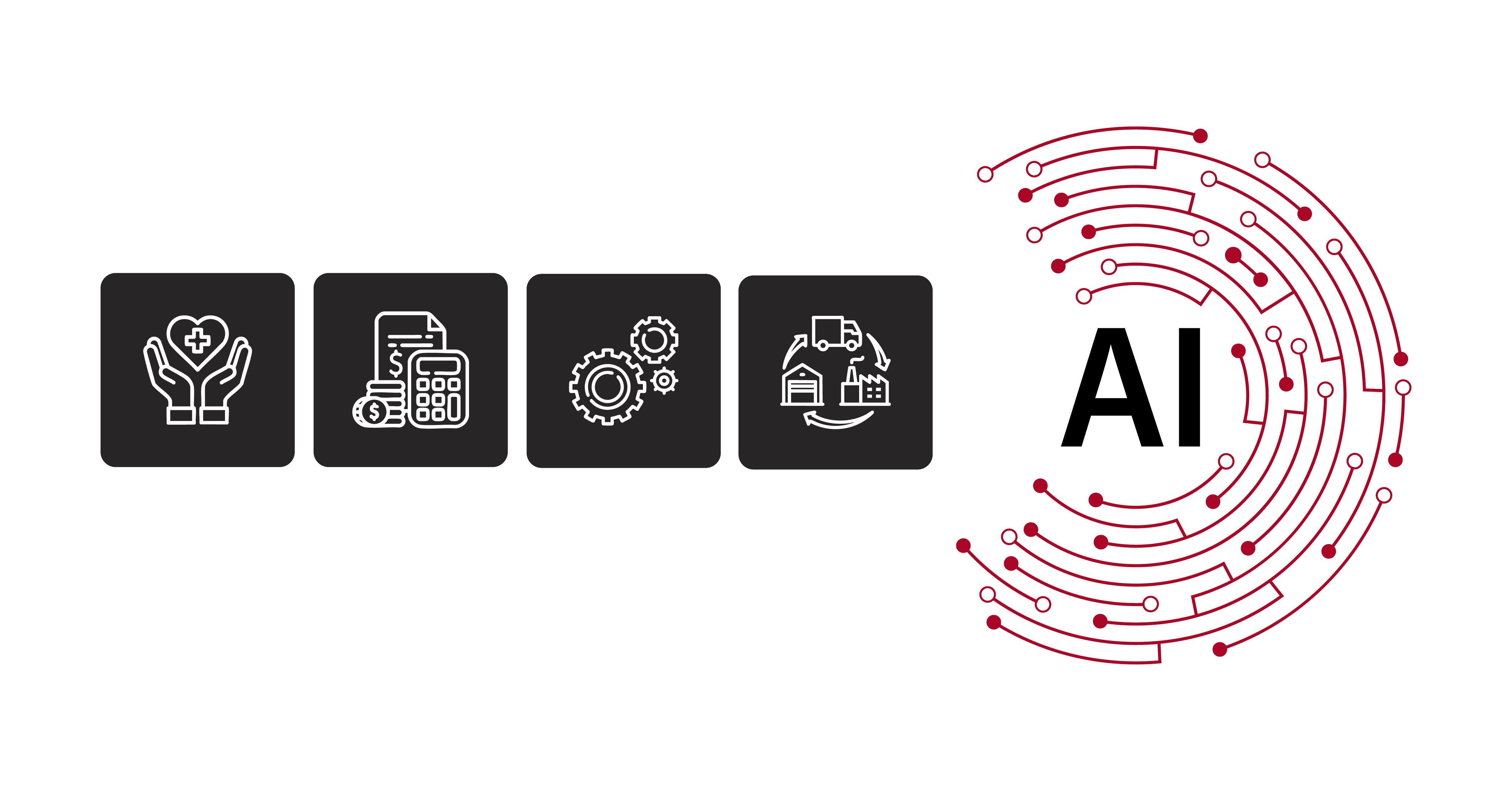
McKinsey’s report indicates that 65% of organizations now use generative AI in at least one business function, nearly double the figure from last year. Gartner projects that more than 80% of enterprises will have generative AI-enabled applications in production environments by 2026. The shift is visible across industries. Financial services: AI assesses fraud risk in real-time across millions of transactions. Healthcare: It supports imaging diagnostics and patient prioritization workflows. Manufacturing: Predictive maintenance reduces downtime and extends asset life. Logistics: AI continuously optimizes supply chain routes using live data. PwC estimates AI could add up to $15.7 trillion to global GDP by 2030. That value will come from organizations that build intelligence into execution, particularly when AI is embedded inside core operating systems rather than layered on top of them.
2. Specialized Models Are Becoming the Default
Model development is moving quickly toward specialization, with a growing wave of domain-adapted and efficiency-optimized systems entering production. Gartner predicts that by 2027, organizations will use small, task-specific AI models three times the volume of general-purpose large language models. This reflects operational realities:
The advantage is shifting from model size to deployment discipline.
- Lower inference cost
- Faster response cycles
- Clearer governance boundaries
- Higher predictability in regulated environments
3. Agentic Systems Are Reshaping Workflows
Generative AI started with summarizing and drafting. These days, systems are going beyond simple outputs. Agentic AI can plan, coordinate, and execute multi-step processes across digital environments.
This shift is changing how execution happens inside organizations.
- In software development, AI supports testing and documentation review.
- In procurement, it evaluates vendor proposals and prepares structured recommendations.
- In customer service, AI agents manage complex interactions with limited escalation.
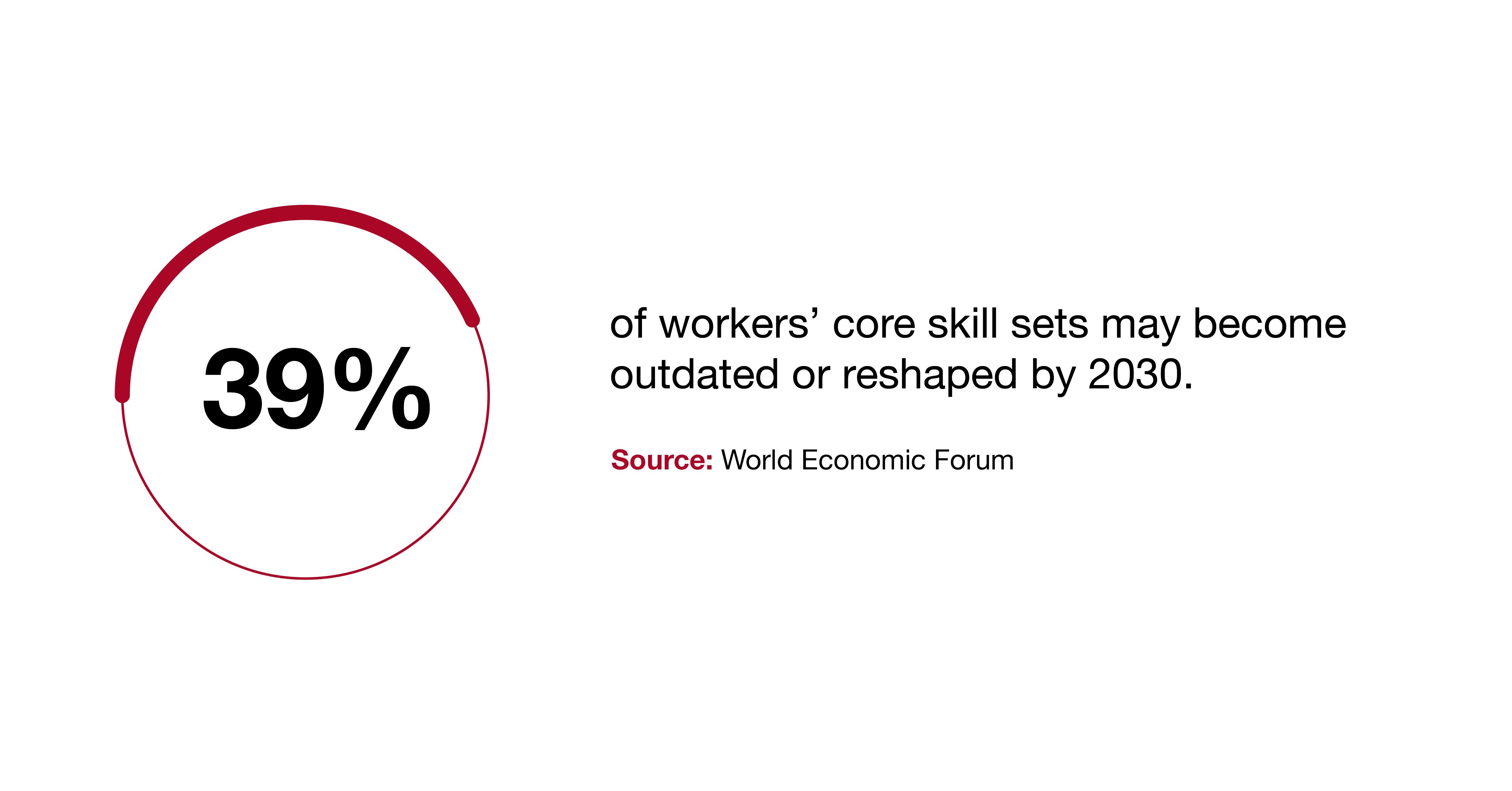
Recent workforce research indicates that roughly two-fifths of existing core skills (39%) will be transformed or become outdated by 2030. The pace may be steadier than pandemic-era disruption, but the shift remains structural. Human roles are becoming more and more focused on oversight, decision-making, and handling exceptions as AI systems take on greater execution responsibility. Execution architecture is becoming hybrid by design.
4. Capital Is Concentrating Around Applied AI
Investment is now following impact rather than possibilities. Generative AI continues to attract funding, but the focus has shifted toward systems that operate directly inside enterprise workflows. Finance teams, procurement functions, supply chains, and compliance operations are seeing AI embedded directly into their systems. Applied AI reduces decision latency, improves forecasting accuracy, and standardizes execution at scale. Leaders are investing in the redesign of working systems rather than experimentation for novelty.
5. Governance Defines Competitive Stability
Oversight becomes important as AI affects decisions about risk, compliance, hiring, and pricing. Volatility is introduced by scaling without governance. Leading organizations are formalizing:
Regulatory activity is increasing globally. Enterprises embedding governance directly into architecture can scale with confidence. Governance no longer follows innovation; it enables intelligence to operate reliably at enterprise scale.
- Clear ownership for each AI system
- Continuous monitoring and performance tracking
- Defined escalation paths for failures
- Documented validation standards
Conclusion:
AI adoption has become common. Architectural integration is becoming the differentiator. Infrastructure design, execution models, capital discipline, and governance frameworks are converging around intelligence. Organizations designing deliberately for this convergence will compound advantage. Those layering AI onto legacy systems will accumulate integration debt. The next phase of modern organizations belongs to enterprises that treat intelligence as structural design. At StrategistHub, we build AI-first systems with disciplined deployment, defined ownership, and scalable governance. If your organization is transitioning from pilots to production, aligning architecture early determines long-term stability.